

LAND USE PROJECT: 600 MAIN STREET SE
Location: 600 Main Street SE
Developer Website: https://600mainse.com/
Land Use Applications submitted by the applicant:
Comprehensive Plan Amendment to change the future land use designation of the property from Parks and Open Space to Urban Neighborhood and to amend the built form designation to Corridor 6.
Zoning Map Amendment to rezone the property to Built Form Corridor 6 and to change the Mississippi River Corridor Critical Area Overlay District classification from UM-1 to UM-3.
Setback Variance to reduce the front yard setback adjacent to 6th Avenue SE and the interior side yard setback along the southern edge of the property.
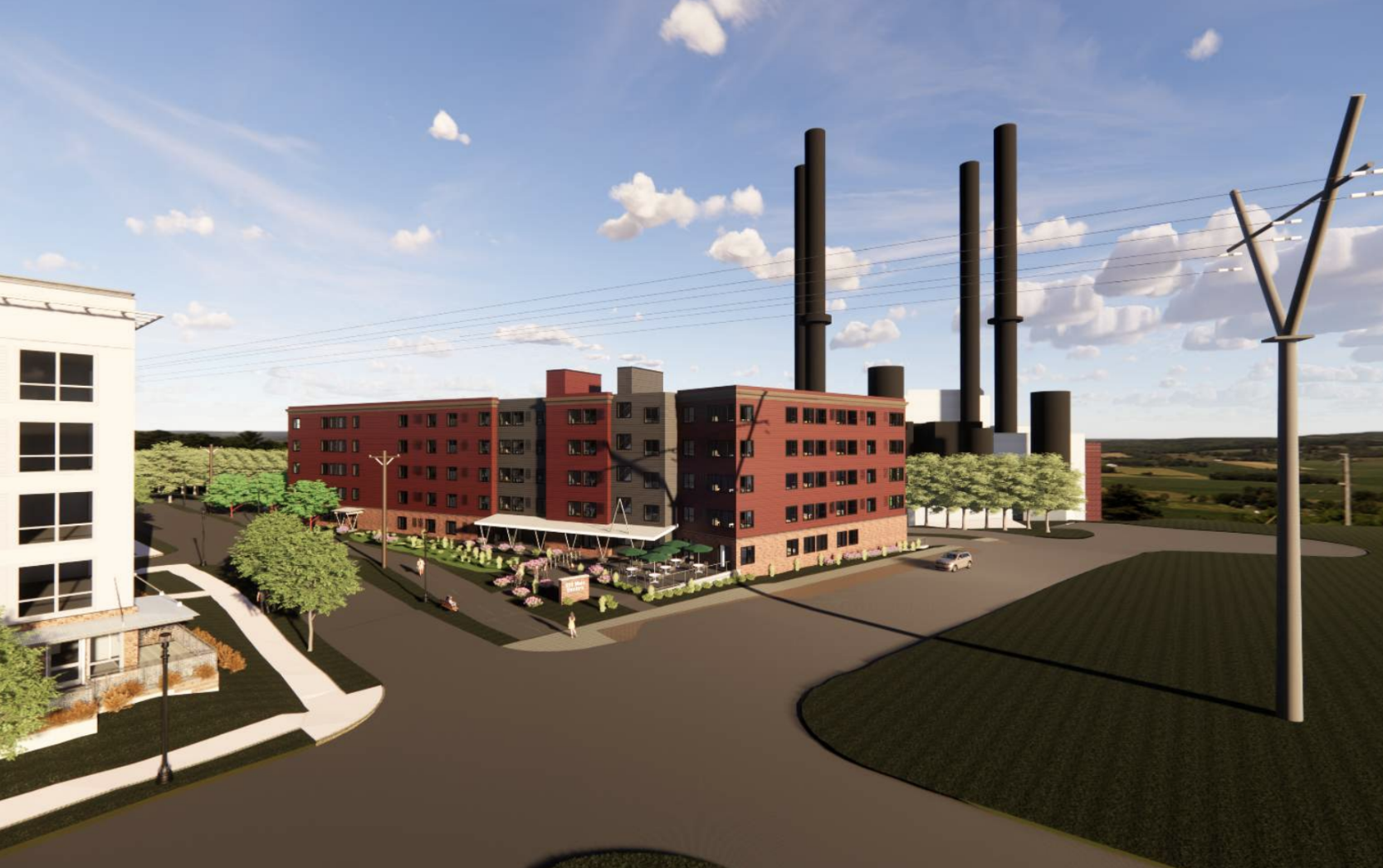
EBNP Statement on 600 Main Street Southeast Rezoning & Comprehensive Plan Amendment
The East Bank Neighborhoods Partnership (EBNP) has prepared this statement regarding the proposed rezoning and comprehensive plan amendment for 600 Main Street SE following neighborhood engagement, meetings with the developer, discussions with Friends of the Mississippi River, information from Father Hennepin Stewardship, and conversations with community leaders who hold knowledge of prior discussions regarding this parcel.
Upon considering these perspectives, EBNP believes this unique parcel should continue to be guided for future public park use, and any development should be done in accordance with the current zoning that was specifically crafted to protect this critical river area.
Historical Context
In 2009, when the developer proposed rezoning this parcel, the National Park Service, Department of Natural Resources, Mississippi Watershed Management Organization, and University of Minnesota all joined the neighborhood in opposing the proposal. The Minneapolis City Council, on the recommendation of the Minneapolis City Planning Commission, voted to deny that rezoning request. This precedent is instructive.
Preservation for Future Parkland
EBNP's primary desire is that the parcel at 600 Main Street SE remains guided as a site for future Minneapolis Park and Recreation Board (MPRB) acquisition and park development. This aligns with current feedback, decades of prior community input, long-range master planning, and public commitments made by successive park boards and city councils.
MPRB's long-range master plans, adopted by the Minneapolis City Council and Metropolitan Council, identify this parcel as critical to completing the continuous park and trail system essential to riverfront protection and public access. This parcel would be vital to connecting Dinkytown and Como—both underserved communities for park access—to the Mississippi River. While immediate acquisition may not be feasible, EBNP believes MPRB should not abandon its long-term commitment to this parcel. Park acquisition strategies can evolve, extend over generations, and new opportunities may arise. Zoning changes are permanent.
The proposed trade-off—a dead-end bike path which will not enhance the bike network without the further, difficult acquisition of BNSF land—is insufficient compensation for MPRB’s ending of plans to acquire this parcel. If MPRB determines that acquisition is not currently feasible due to an unwilling seller or insufficient funds, that is an understandable challenge. However, MPRB should not respond by recommending zoning changes that benefit the landowner. MPRB should either state that the parcel should remain as guided in order to protect as much of the riverfront as possible or make no further recommendations on the rezoning. Land use policy decisions beyond parkland guidance belong with the City.
No Rezoning
EBNP opposes any rezoning of this parcel. The developer has rights to build within current zoning, which was crafted to protect the river corridor. With bonuses and Conditional Use Permits (CUPs), the property owner may be able to build this proposal or something similar under current zoning. The use of these bonuses, such as the proposed affordability, should remain a requirement to build beyond what is allowed by right. The CUP process helps mitigate visual impacts and ecological harms. The City has already created these options, therefore should not amend its comprehensive plan to further accommodate this project.
Rezoning creates permanent entitlements that will survive any particular proposal. Once zoning is changed, it remains with the parcel regardless of future ownership or use. The rezoning would also establish a troubling precedent for the Mississippi River Corridor Critical Area, representing the first and only MRCCA rezoning, undermining the riverfront protection framework that numerous government agencies and organizations recently built.
Our Shared Stewardship
EBNP strongly believes that we all are collective stewards of our precious riverfront. This resource holds immense ecological, cultural, and historical significance. Any alterations or zoning decisions affecting this parcel must be considered with extreme caution and in light of the Mississippi River as an important public trust. River access and enjoyment must be preserved for future generations and guided by community voices. We strongly recommend that these decisions also be made with serious input from Indigenous communities.
The current comprehensive plans represent the collaboration of multiple government agencies, nonprofits, and communities working toward a common vision for the riverfront. No single development should cause any of us to abandon those shared commitments and set a dangerous precedent for development along this irreplaceable natural resource. We are trustees and stewards of something larger than any one project.
Conclusion
EBNP supports housing and believes the Twin Cities needs more of it. We have a history of supporting larger and more dense developments. However, we must also recognize the uniqueness of this parcel. The owner of 600 Main St SE has options to build under existing zoning. The City of Minneapolis and MPRB have a responsibility to steward the riverfront for generations. These interests are not incompatible if the development respects the existing constraints that have guided riverfront planning for decades.
East Bank Neighborhoods Partnership
September 9, 2026
Why oppose rezoning?
Long planned as parkland
For the past 140 years, MPRB has patiently implemented Horace Cleveland’s vision that everything between Grand Rounds parkways and the waterfront, including 600 Main, should be public parkland with open views to and from the water.
With the exception of some industrial uses (power utilities, railroads) 600 Main is the only privately owned parcel between the parkway and the river for miles up and downstream.
Decades of community engagement and long-range planning have prioritized this separation. For example:
2016 Central Mississippi Riverfront Regional Park Master Plan
2040 Plan (Future Land Use Parks and Open Space and Built Form Parks)
Proposed Trail would not promote connectivity
Access to BNSF right of way is the only way to make a connection from the Stone Arch Bridge to the Dinkytown Greenway.
Proposed dead-end easement parallel to Main Street would be useless for bikes and would simply add pavement where there should be vegetation.
Dead-end easement therefore offers the public nothing of real value in exchange for the lost opportunity of a future gateway park to and from the Stone Arch Bridge.
What can I do?
The Park Board will consider a resolution opposing rezoning 600 Main St SE at its Regular Meeting at 5pm on Wednesday, Oct 7 at Park Board Headquarters, 2117 West River Rd N, Mpls
Speak in favor of the resolution during Open Time (time certain 5:30pm)
The City Planning Commission considers rezoning requests. Contact your City Council member to express your concerns.
Letters / Resolutions from other Organizations
Owámniyomni Okhódayapi | September 1, 2026
Friends of the Mississippi River | September 11, 2026
Minneapolis Park & Recreation Board | September 11, 2026
(for consideration at their Planning Committee meeting (September 16, 2026)