

LAND USE + INFRASTRUCTURE COMMITTEE
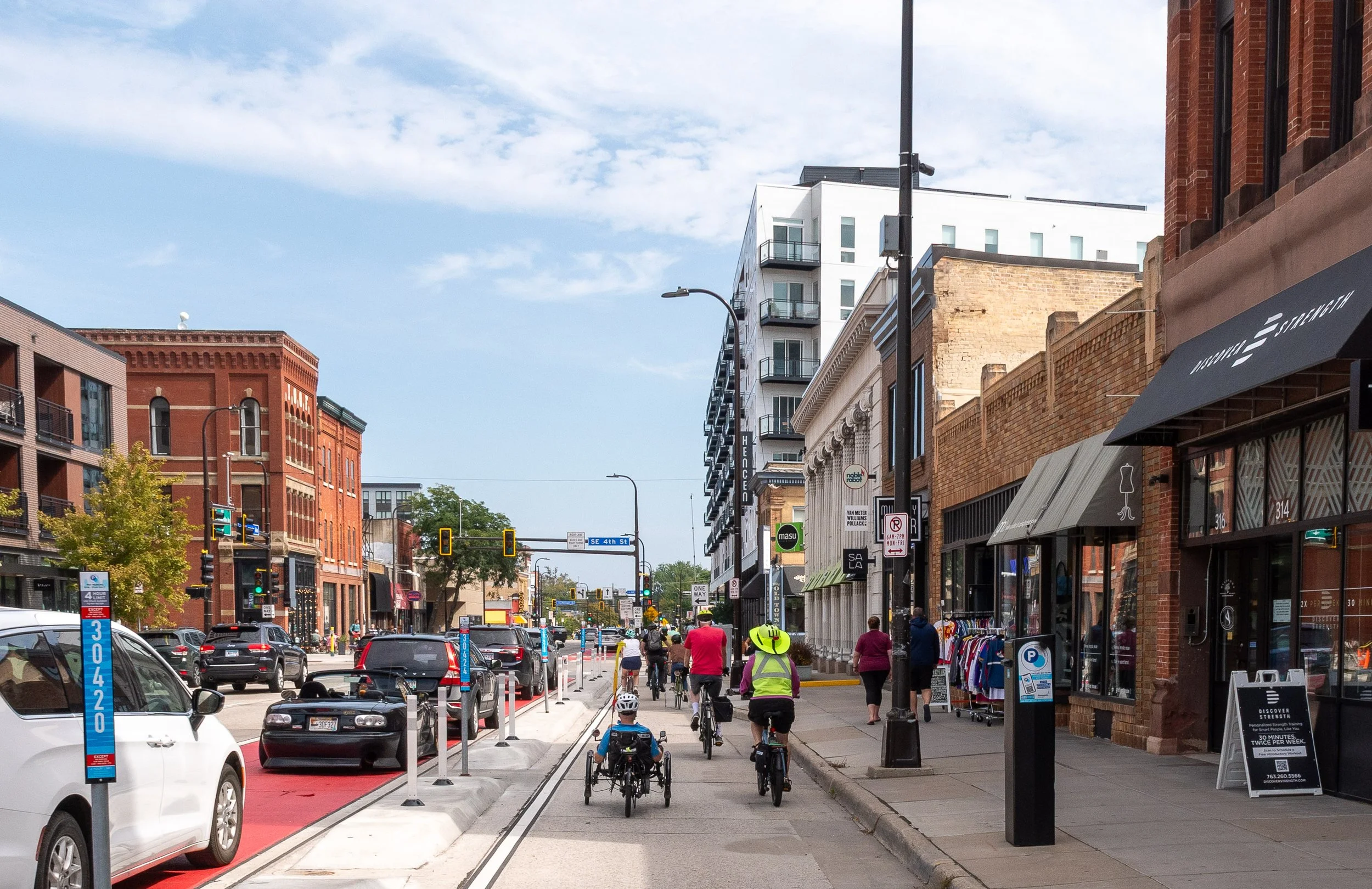
This committee is the first stop for developers, planners and outside agencies in our neighborhoods. It makes recommendations to the board and city on land use applications and infrastructure projects. We ask that City of Minneapolis Public Works, Hennepin County, MnDOT, and other agencies reach out to us and meet with our committee in preparation of any projects that may happen in our neighborhoods. The committee typically meets virtually every 1st Tuesday of the month, from 6:30 pm to 8 pm.
Committee Chair: Derek Eicholz
Please contact Chris Lautenschlager, EBNP Executive Director, if you have any comments, questions, or interest in getting involved: chris@eastbankmpls.org.
Agendas
2026
2025
September 8, 2025 - CANCELED
Current Projects
Visit the City of Minneapolis’ interactive construction map for projects in 2026 to 2030
Background
Over the past two decades, land use and development in the East Bank neighborhoods of Minneapolis have seen significant changes driven by the city’s growth and urban revitalization efforts. In the Marcy-Holmes neighborhood, much of the development has focused on accommodating the expanding University of Minnesota campus. The construction of new student housing, mixed-use buildings, and modern commercial spaces has reshaped the area, particularly in Dinkytown. These changes have increased population density, improved amenities, and enhanced access to transit options, such as the nearby Green Line light rail, further integrating the neighborhood into the broader urban fabric.
In the Nicollet Island and East Bank neighborhoods, development has been more focused on revitalizing the riverfront and preserving historic structures. The neighborhood has seen a mix of new residential and commercial projects, often incorporating modern design elements while respecting the area’s historic character. The redevelopment of the St. Anthony Falls area, including parks and trails, has attracted both residents and tourists, making the neighborhood a vibrant destination. However, as the neighborhood grows, there is ongoing pressure to balance development with preservation of its unique historical and environmental features. Additionally, increased development has led to challenges with traffic congestion and parking, as more people are drawn to the area’s amenities and proximity to downtown Minneapolis.
The Como neighborhood, which includes a mix of residential areas and proximity to the University of Minnesota, has experienced development that has enhanced its connectivity and infrastructure. In recent years, new multi-family housing projects and the expansion of retail spaces have brought more residents to the area, contributing to a more vibrant, mixed-use environment. However, land use in Como has also been impacted by concerns about maintaining green spaces and community amenities, such as Van Cleve Park. Balancing development with the preservation of public spaces has been a key issue, as new construction projects continue to encroach on previously open areas. Additionally, transportation improvements, such as new bus routes and bike lanes, have helped integrate the neighborhood into the city's broader transit network, further driving growth and development.